
How do you properly orient an aluminum bioclimatic pergola?
Vous envisagez d’installer une pergola bioclimatique et vous vous demandez dans quelle direction la placer ?
C’est une question clé : une bonne orientation fait toute la différence entre une terrasse agréable toute l’année et un espace sous-exploité.
Exposition, trajectoire du soleil, configuration de votre maison… voici tout ce que vous devez savoir pour faire le bon choix et tirer le meilleur parti d’une pergola bioclimatique en aluminium sur-mesure.
Why is the orientation of your pergola so important?
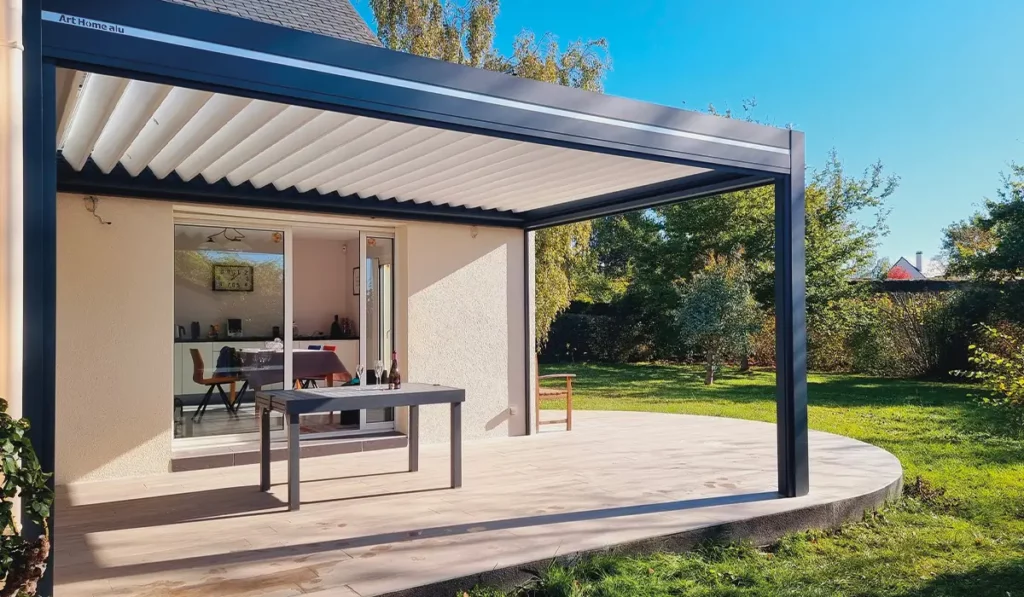
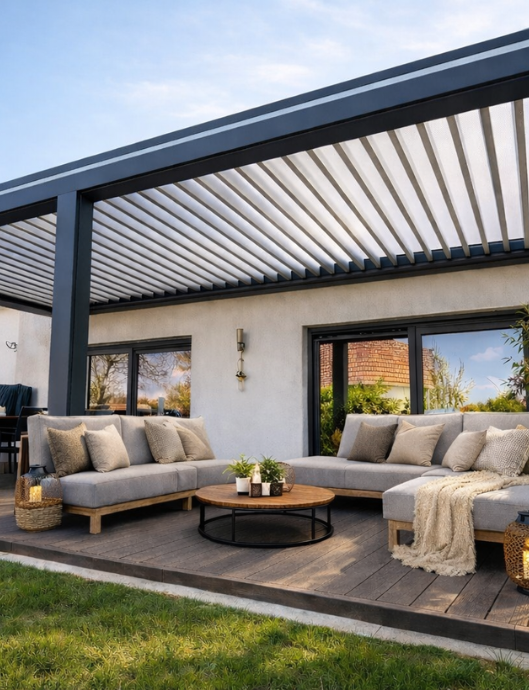
Unlike a pergola with a fixed roof, the bioclimatic pergola uses adjustable slats to control light, heat, and ventilation. But even with this level of flexibility, the structure’s orientation remains a key factor. It determinesthe thermal efficiency of your installation, your day-to-day comfort, and the impact on the amount of light in adjacent rooms.
A well-placed pergola lets you enjoy the outdoors from spring through fall—or even longer, depending on your region.
Which orientation should you choose based on your location?
Exposition Sud: The Standard for Controlled Sunlight
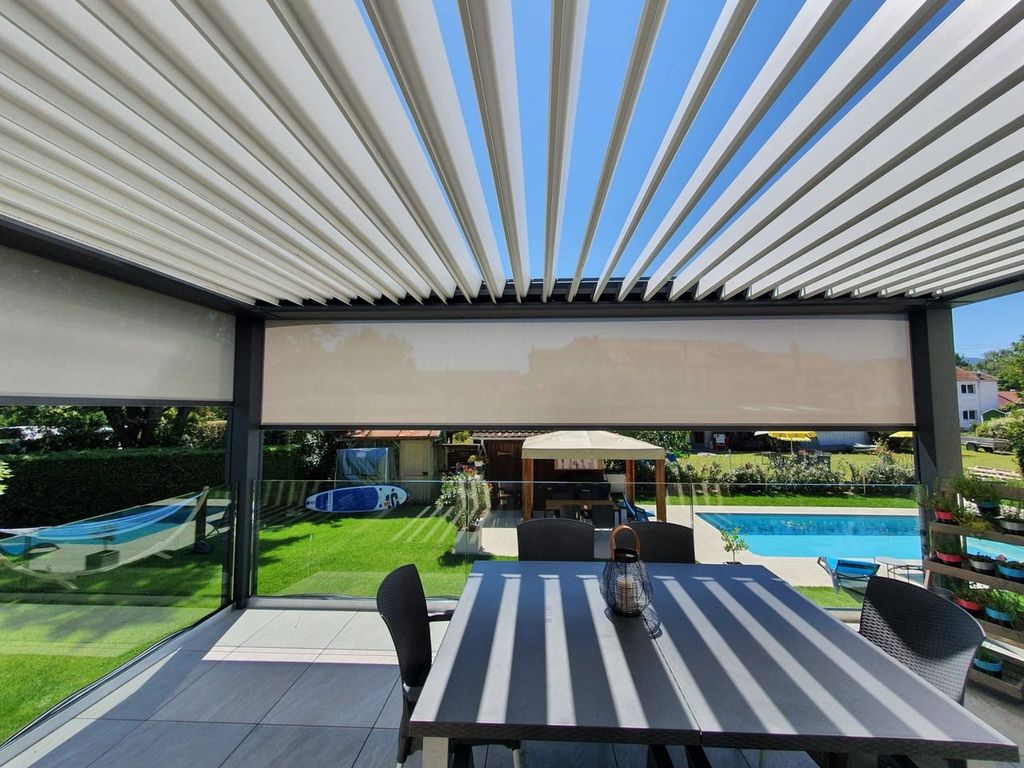
A south-facing patio enjoys plenty of sunlight, especially in the summer. This is precisely where a bioclimatic pergola truly shines: by adjusting the angle of the slats, you can block the heat during the hottest parts of the day while still letting in soft light at other times. In winter, opening the slats fully allows the sun to naturally warm your home—a significant energy-saving benefit.
East-Facing: Welcoming the Morning Coolness
An east-facing location is ideal if you enjoy having coffee on a patio in the morning, sheltered from the afternoon heat. It is particularly well-suited to regions with a warm climate.
West-Facing Exhibition: Enjoy Afternoons Through the Evening
A west-facing orientation is particularly popular for outdoor living spaces. It allows you to follow the sun’s path in the afternoon and extend your evenings in warm, inviting light. The adjustable slats gradually adapt to the angle of the sunlight, providing consistent comfort.
North-facing exposure: best avoided for a freestanding pergola
A north-facing orientation deprives the patio of direct sunlight and can cast shadows on the adjoining living areas. It is generally not recommended, except in very specific situations or when using a freestanding pergola that is separate from the main structure.
Should the slats be parallel or perpendicular to the facade?
The direction in which the planks are installed directly affects your thermal and visual comfort. Here's how to choose:
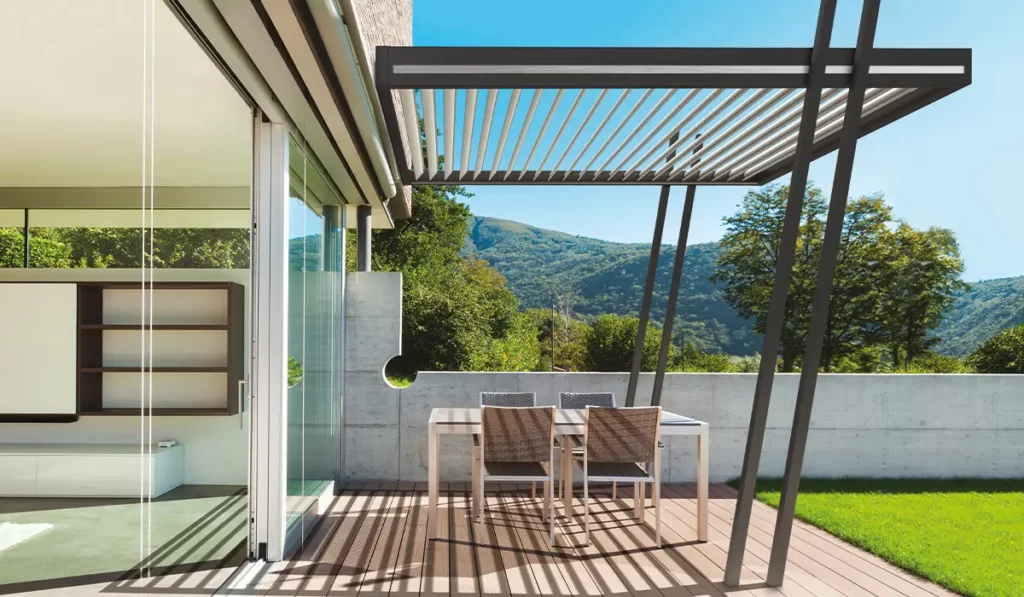
East- or West-facing facade:slats perpendicular to the facade effectively capture the first rays of morning sunlight or the gentle evening light, without causing glare.
South-facing facade:slats running parallel to the facade naturally follow the sun’s path. They provide shade at noon in the summer and recede in the winter to let in the sun’s warmth.
At Art Home Alu, our teams review each project individually to recommend the installation method best suited to your specific situation: orientation, deck dimensions, ceiling height, and architectural integration.
Does an aluminum bioclimatic pergola cast a shadow on the house?
Pas si elle est bien conçue. En aluminium sur-mesure, la structure peut être dimensionnée avec précision pour ne pas empiéter sur la lumière naturelle de vos pièces de vie.
Le choix de la couleur des lames joue également un rôle : les teintes claires réfléchissent la lumière vers l’intérieur, tandis que les teintes sombres absorbent davantage.
In the summer, the pergola acts as a thermal shield that blocks solar radiation before it reaches your windows, which significantly reduces indoor heat and your need for air conditioning. In winter, the open slats let the sun work for you for free.
Options for Taking Comfort to the Next Level
An aluminum bioclimatic pergola is, by its very nature, adaptable. In addition to its orientation, various features allow you to customize your installation to suit your needs and environment:
Side Blinds
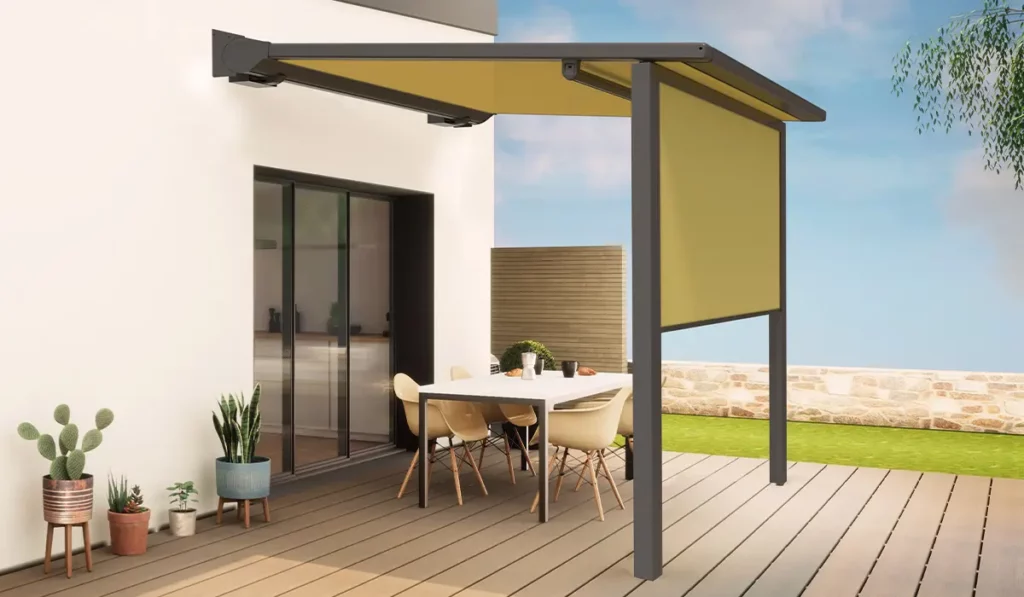
To protect yourself from the low-angled sun, the wind, or prying eyes.
Built-in LED lighting
To extend your evenings outdoors without sacrificing elegance.
Integrated Sensors
For automatic blade control based on weather conditions.
Privacy screen
To protect your privacy while enhancing the look of your patio.
At Art Home Alu, every pergola is made from high-quality aluminum, designed to last and adapt to your changing needs. Nothing is set in stone: accessories can be added at any time after installation.
Conclusion
Bien orienter sa pergola bioclimatique, c’est maximiser son confort tout au long de l’année tout en optimisant la performance énergétique de votre maison. Exposition Sud ou Ouest, lames parallèles ou perpendiculaires, finitions sur-mesure : chaque détail compte.
Chez Art Home Alu, nous vous accompagnons de la conception à la pose pour que votre installation soit parfaitement adaptée à votre environnement et à votre style de vie.
FAQ: Orientation of the bioclimatic pergola
What is the best orientation for a bioclimatic pergola?
A south- or west-facing orientation is generally recommended. It allows you to enjoy controlled sunlight thanks to the adjustable slats, while providing effective protection from direct sunlight in the summer.
Can a bioclimatic pergola be adapted to any layout?
Yes. Thanks to its custom-designed aluminum construction, a bioclimatic pergola can be adapted to most yard and facade layouts. Precise sizing ensures that natural light continues to enter the interior while optimizing outdoor comfort.
Do we have to decide everything right when we move in?
No. An aluminum pergola is inherently adaptable. Additional features—such as awnings, side panels, privacy screens, and heating—can be added after installation, depending on your preferences and how you plan to use it.
Does a bioclimatic pergola reduce energy consumption?
Yes, indirectly. By blocking solar heat before it reaches your windows in the summer and allowing the sun to heat your home naturally in the winter, it helps reduce your air conditioning and heating needs.