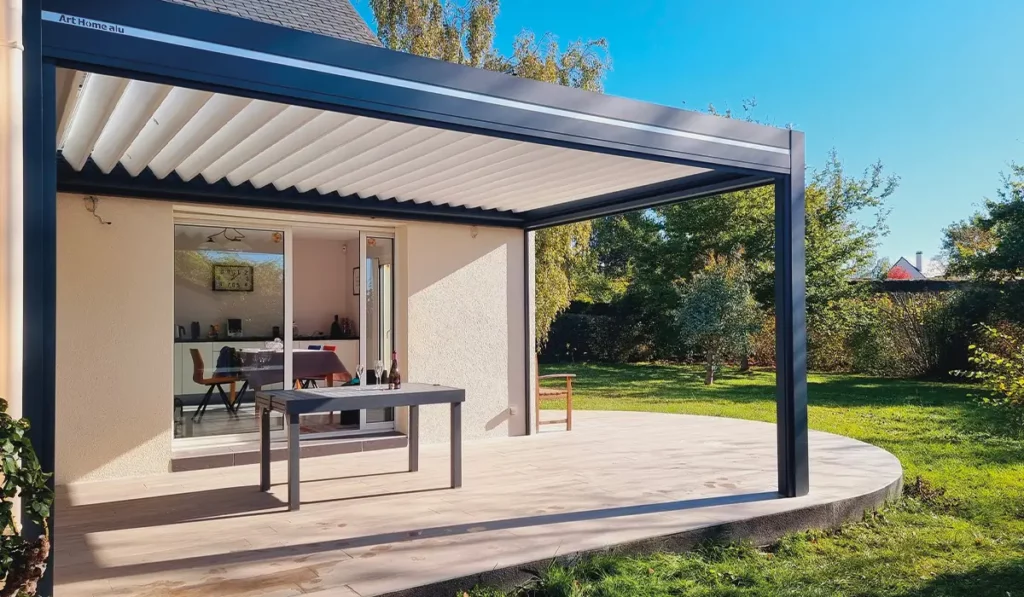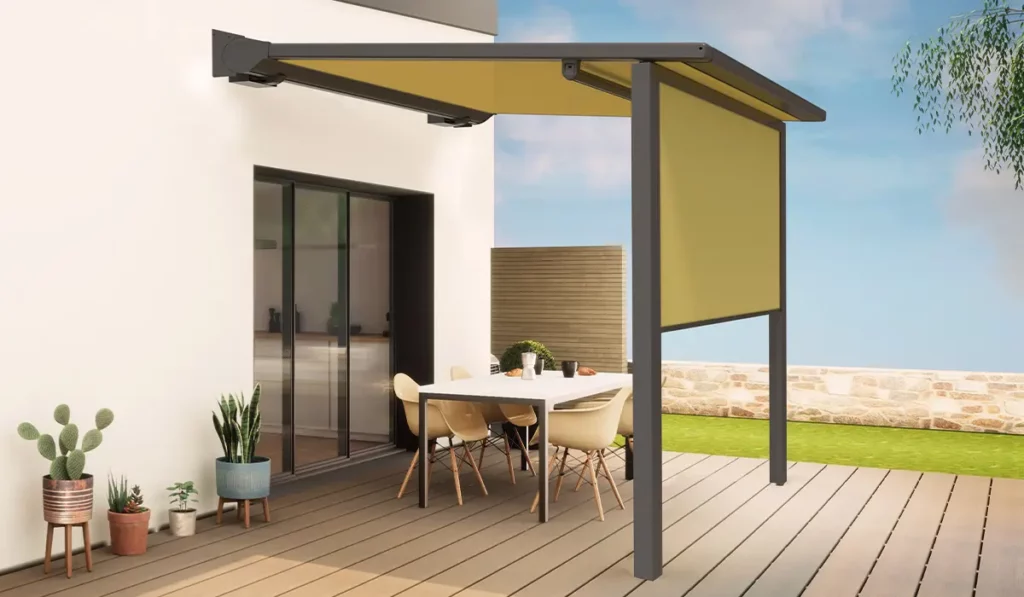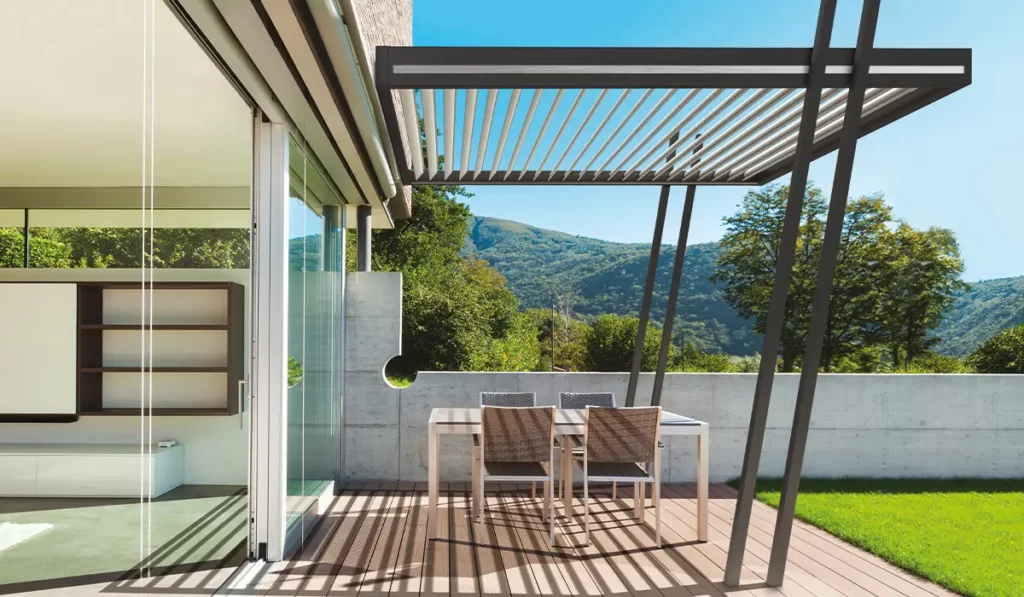

There was a time when the patio was merely a transitional space—a simple buffer zone between the house and the garden, used for just a few weeks a year once the warm weather arrived. Those days are gone. Today, the covered patio is designed, decorated, and furnished just like any other room in the house. And at the heart of this quiet revolution, the bioclimatic pergola plays a central role.
More than just a shelter, the pergola has become a living space in its own right. It houses cozy lounges, communal dining tables, open-air workspaces, reading nooks, and havens of relaxation. It is lived in, furnished, lit, and heated. It has its own atmosphere and its own rituals. It is, in every respect, a room in the house—simply placed under the open sky.
At Art Home Alu, a French manufacturer of high-end aluminum pergolas based in Bischwiller, Alsace, we work every day with homeowners and professionals to help them achieve this goal: designing not just a pergola, but a complete outdoor living space, thought out down to the smallest detail, to be enjoyed to the fullest all year round.
Rethinking the boundary between inside and outside
The house that opens onto the garden
Contemporary architecture has profoundly transformed our relationship with space. Large picture windows, sliding French doors, and seamless transitions between indoor and outdoor flooring have gradually blurred the line between inside and outside. The pergola fits into this trend by offering an intermediate space—neither quite outside nor quite inside—that naturally extends the home’s living areas into the garden.
Adjacent to the facade, flowing seamlessly from the living room or kitchen, the Art Home Alu bioclimatic pergola becomes a natural extension of the home. The terrace tiles continue the pattern of those in the living room. The pergola’s artificial lighting echoes the same tones as the interior lighting. The furniture follows the same aesthetic style as the rest of the house. The boundary disappears, and with it, the living space expands considerably.
Adding a bioclimatic pergola to your home gives you an average of 15 to 40 square meters of additional living space—without any masonry work and with a significant increase in property value.
The Importance of Architectural Continuity
For a pergola to truly feel like a room in its own right, its design must blend seamlessly with the home’s architecture. This starts with the choice of finishes: the color of the powder-coated aluminum structure should complement the home’s windows and doors, facades, or existing siding. The Art Home Alu ranges offer more than 200 available colors, ensuring seamless integration regardless of architectural style—contemporary, traditional, industrial, or Scandinavian.
Continuity is also achieved through the choice of flooring materials, furniture, and lighting fixtures. A well-integrated pergola doesn’t feel like an afterthought, but rather like a natural architectural element—as if it had always been part of the house.
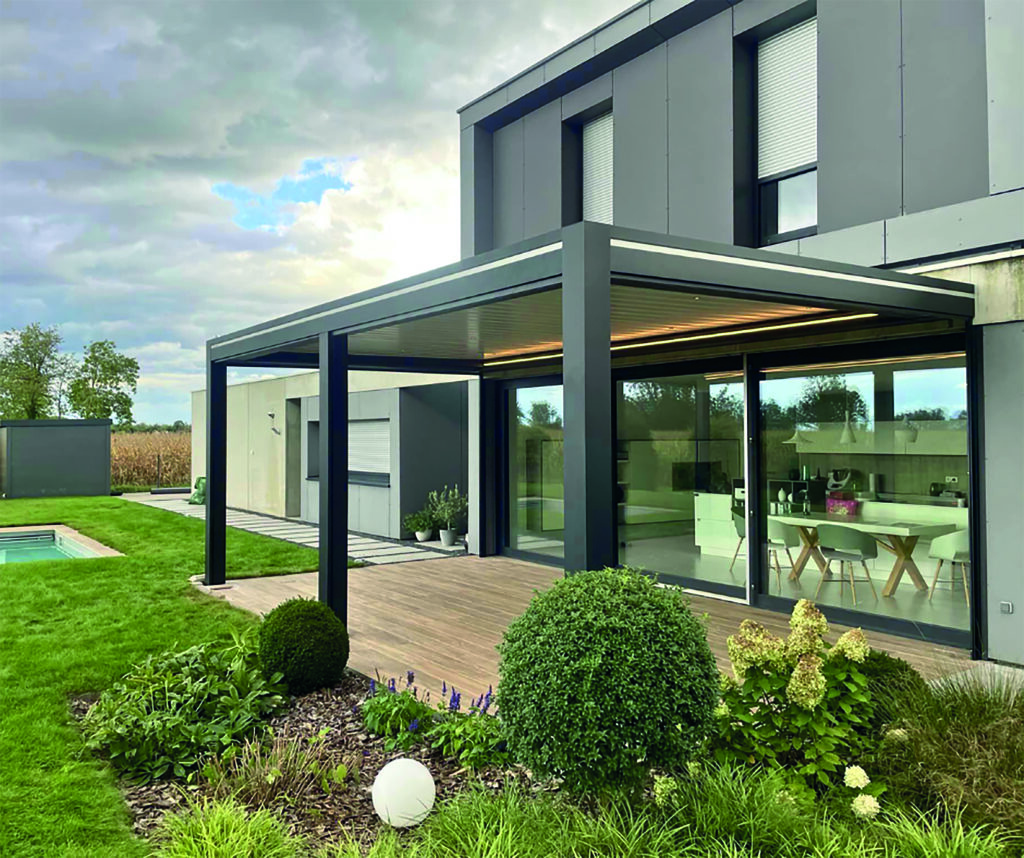
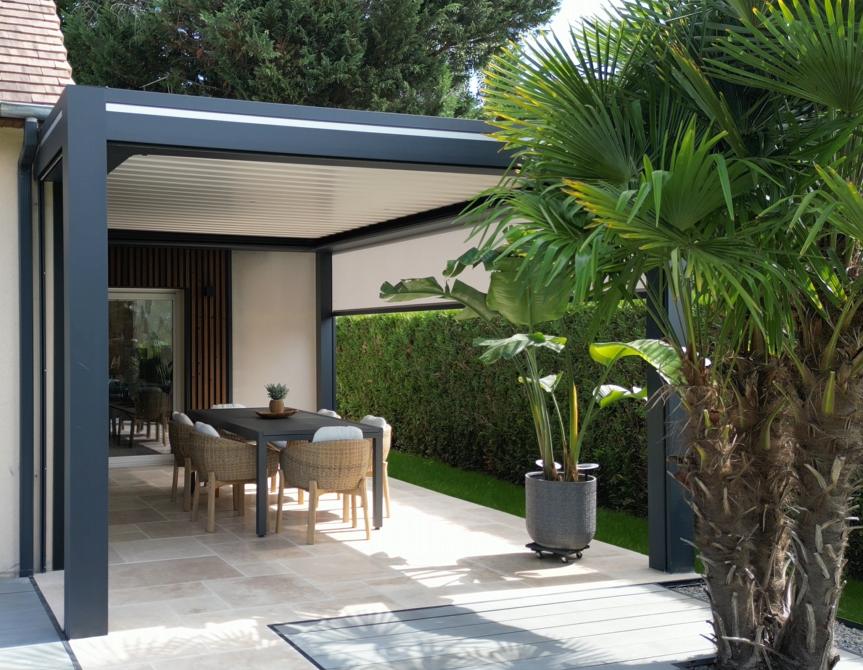
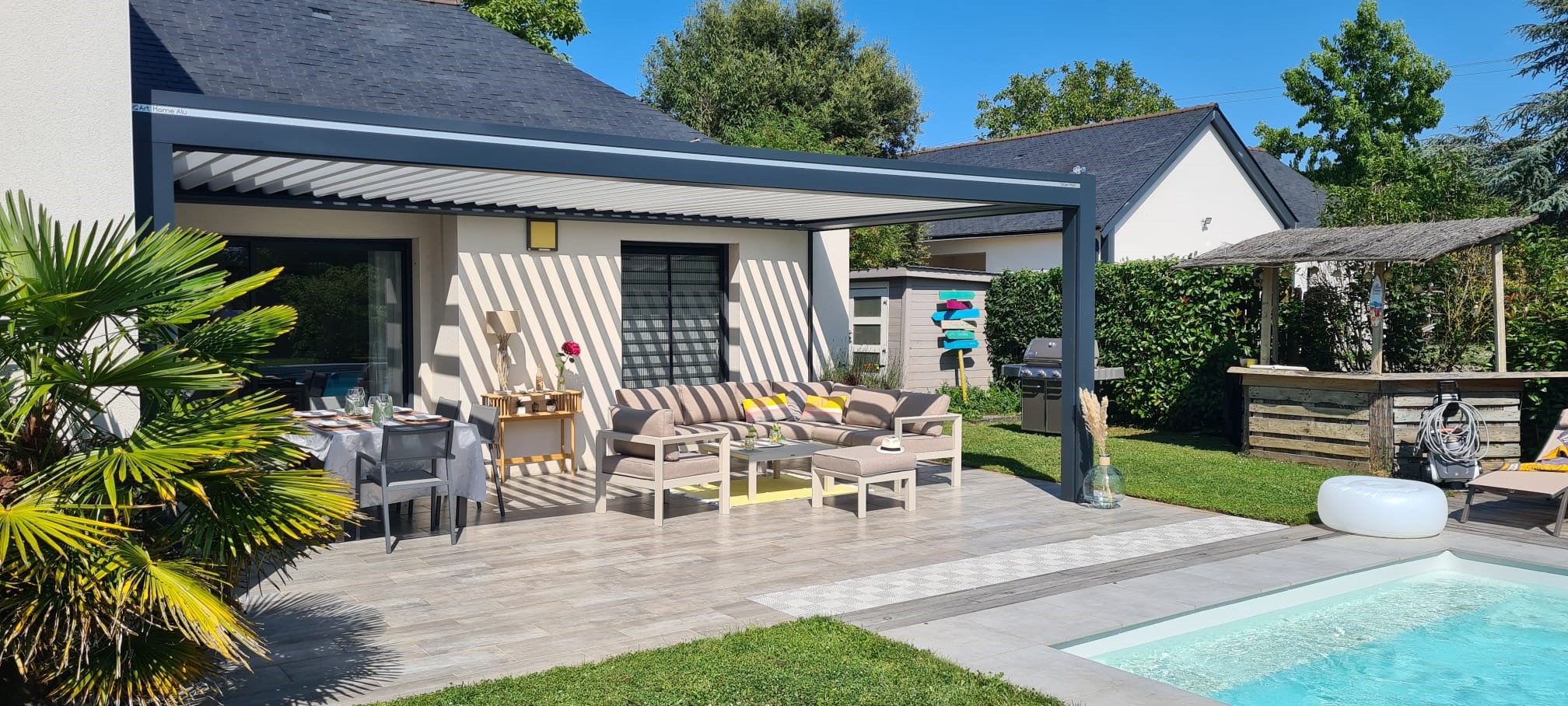
The outdoor living room: the art of entertaining under the stars
An outdoor living area is undoubtedly the most common and obvious use of a pergola as a living space. Spacious sofas with weather-resistant cushions, a teak or resin coffee table, outdoor rugs with geometric patterns, carefully arranged potted plants… Under a bioclimatic pergola, the outdoor living area offers a level of comfort that traditional setups simply cannot match.
The adjustable slats control the light to prevent glare as the day comes to a close. The LED lighting built into the posts and slats creates a soft, subdued ambiance as soon as the sun goes down. Infrared heating maintains a comfortable temperature until late in the evening. Side shades provide privacy from the neighborhood. All these elements make the pergola lounge a gathering space you’ll never want to leave.
The outdoor dining area: the joy of dining al fresco
Lunch outdoors on a spring Sunday, a candlelit dinner under the stars on a summer evening, brunch with the family on a rainy autumn Saturday… The bioclimatic pergola makes these moments a regular part of life, no matter the season. It shelters the large family table just as it accommodates an intimate dinner for two, adapting to every occasion with the same elegance.
Combining these features with an outdoor kitchen—including a countertop, built-in grill, and outdoor refrigerator—creates a truly self-contained social space where meal preparation is an integral part of the shared experience. The covered patio then becomes the beating heart of the home, the place where everything happens, where guests linger, and where memories are made.
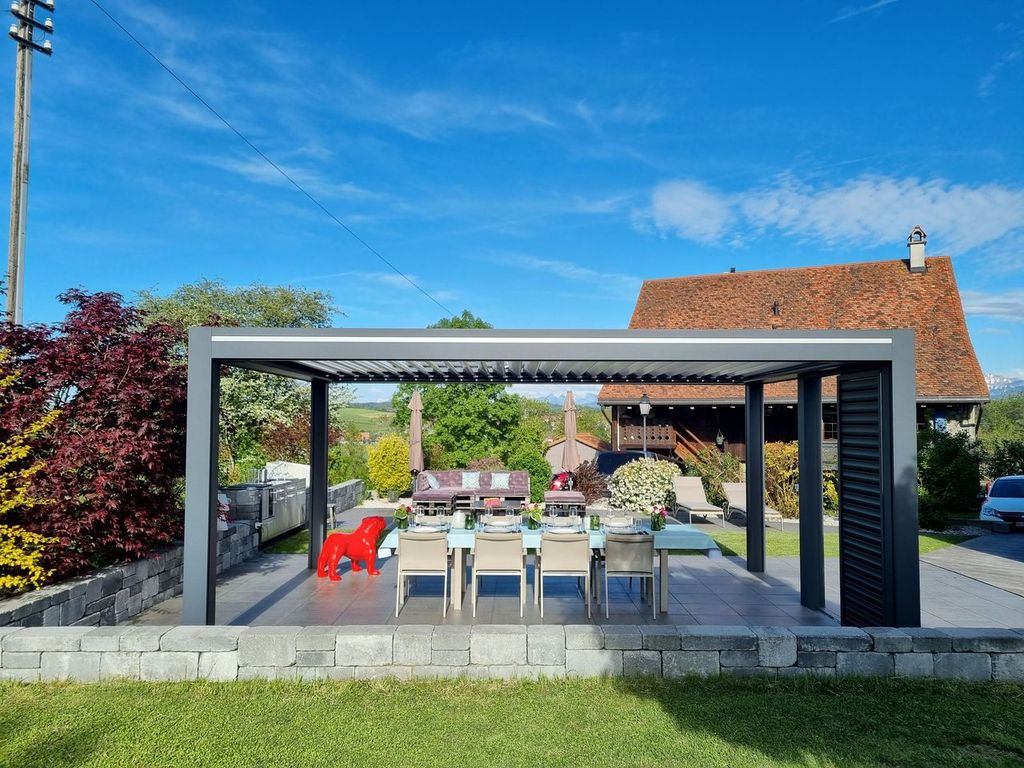
Art Home Alu Inspiration
The Lux Integral line, with its wide range of available sizes and built-in lighting and heating options, is particularly popular for large-scale outdoor dining projects. Its sleek design and quiet motor make it the ideal setting for family meals and elegant gatherings alike.
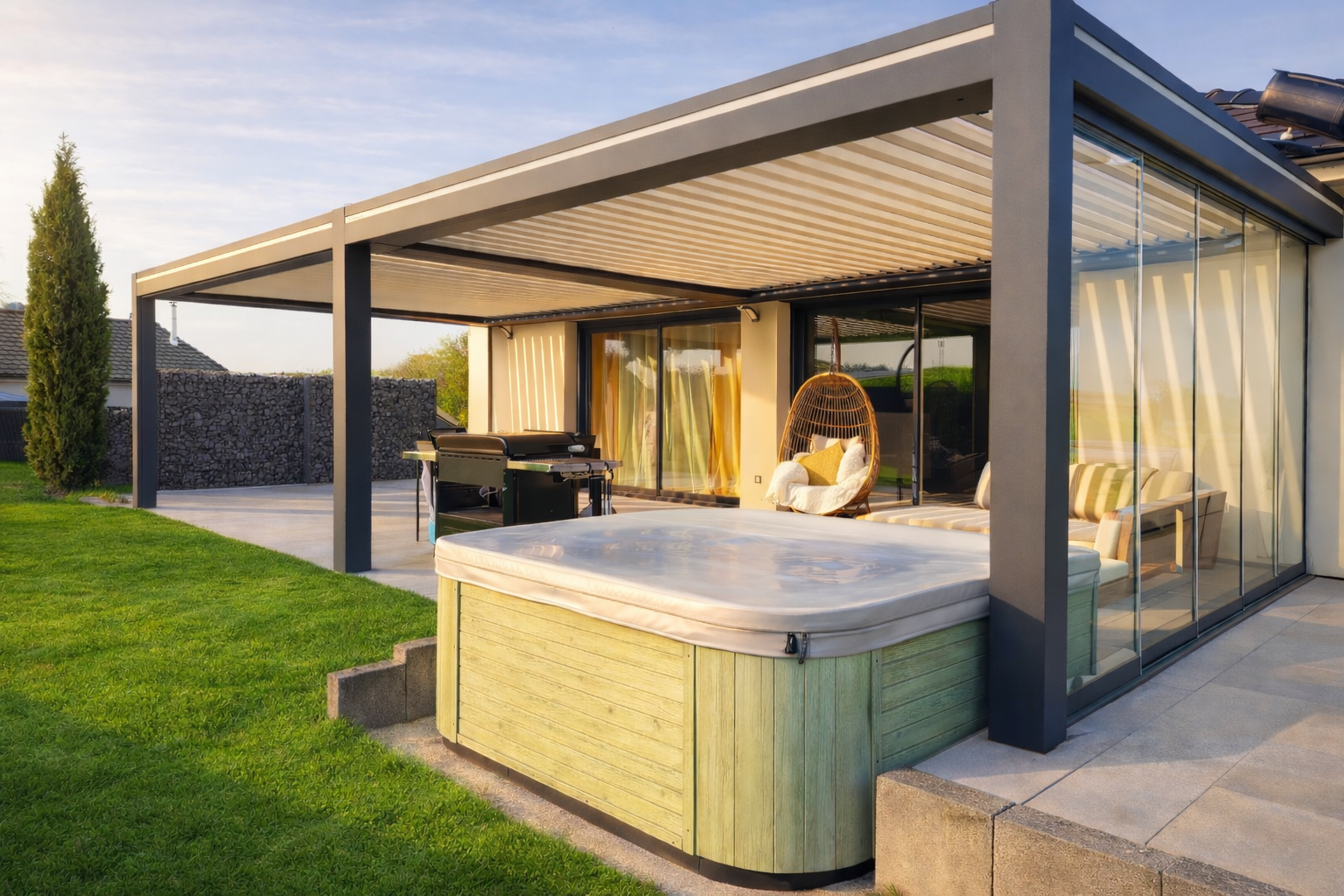
The Wellness Area: Spa, Relaxation, and the Great Outdoors
A hot tub, a Nordic bath, an outdoor sauna, a meditation area, or simply a lounge chair and a good book… The bioclimatic pergola is also the ideal setting for outdoor wellness spaces. Its ability to protect from the rain while letting in air and light makes it the perfect structure for housing a spa or hot tub that you want to use year-round, even in the middle of winter under the snow.
The adjustable louvers play a key role here: opened on sunny days to enjoy the sky and the outdoors, and closed during rain or extreme cold to keep heat and moisture inside the structure. The built-in low-intensity lighting creates an atmosphere conducive to relaxation, and the side shades ensure the privacy necessary for well-being.
The remote office: a different way of working
The rise of remote work has given rise to a new category of use that few would have anticipated just a few years ago: the outdoor office. Working under a bioclimatic pergola, surrounded by plants and lulled by the sounds of the garden, has become a daily reality for many remote workers. Natural light filtered through the slats reduces eye strain, the connection to nature improves concentration, and the physical separation from the interior of the home helps structure the workday.
For this purpose, the pergola should be equipped with a built-in power supply for electronic devices and lighting suitable for working at a computer screen. The side panels help block out distractions and maintain optimal concentration, even in windy weather.
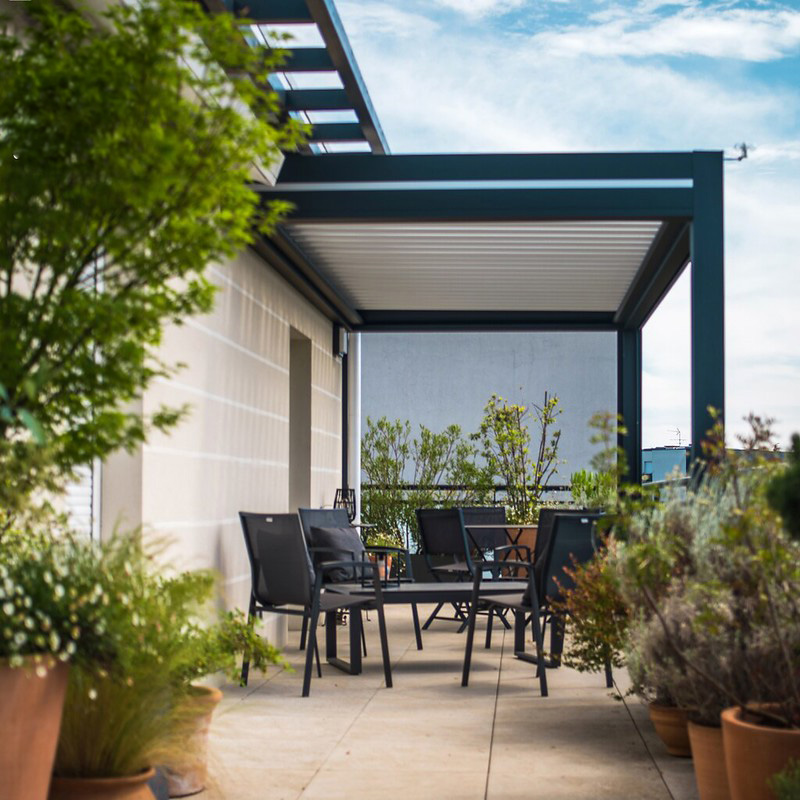
Tips for turning your pergola into a true living space
Furniture: Choose pieces that will last
Outdoor furniture has come a long way in terms of quality and design in recent years. For a pergola used as an outdoor living space, materials that are resistant to UV rays, moisture, and temperature fluctuations are preferred: powder-coated aluminum, woven resin, oiled teak, polished concrete, or ceramic for surfaces. Cushions and textiles should be made of outdoor-grade fibers treated to resist mold and fading.
The style of the furniture should complement the overall design of the project. A contemporary pergola with clean lines calls for minimalist furniture, while a more traditional structure pairs well with furniture featuring rounded shapes and natural materials.
Lighting: Setting the Mood
Lighting is one of the most crucial factors in making a space feel like a fully-fledged room. Under a pergola, several levels of lighting should coexist: functional lighting integrated into the slats or posts for activities that require it, low-intensity ambient lighting for social evenings, and possibly decorative lighting—string lights, LED candles, adjustable spotlights—to personalize the atmosphere for different occasions.
Art Home Alu lighting systems can be controlled just like the blinds and heating, allowing you to create pre-programmed mood settings: “Romantic Dinner,” “Evening with Friends,” “Evening Reading”… With a simple press of the remote control, the space is transformed.
Plants: Bringing Nature Indoors
Plants play a fundamental role in making a covered outdoor space inviting. They bring life, color, texture, and fragrance, helping to integrate the pergola into its natural surroundings. For a bioclimatic pergola, opt for large potted plants that can be easily moved with the seasons, as well as climbing plants on the posts or side panels to create a gradual green wall effect.
Aromatic herbs—rosemary, thyme, basil, mint—add a unique sensory dimension and are especially welcome near an outdoor kitchen. Bamboo plants in large pots help create a sense of privacy along the sides of the pergola without the need for permanent enclosures.
Textiles and accessories: the soul of the space
It’s often the little details that transform a space from a functional area into a true living space: a soft throw draped over the sofa for cool evenings, scented candles on the coffee table, cushions with carefully coordinated prints, a small outdoor bookshelf with a few books… These seemingly insignificant elements are actually essential: they are what give the pergola its lived-in, warm, and personal character.
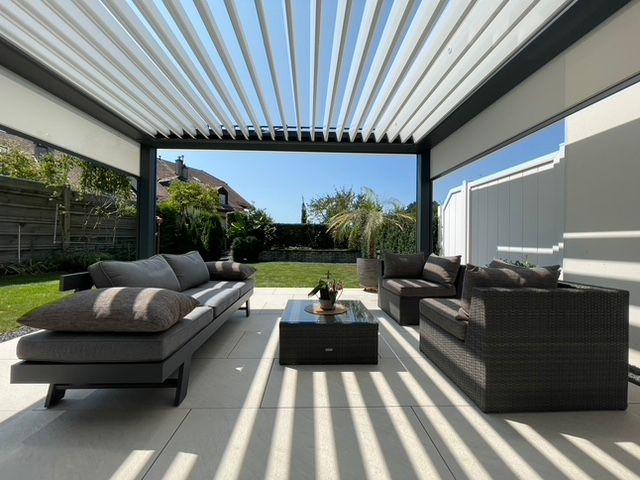
Spring and summer: open up to the garden
In spring and summer, the pergola slats open to let in as much light and fresh air as possible. The side awnings remain retracted for an unobstructed view of the garden. The space is at its most open, its brightest, and closest to nature. It’s the season for large shared meals, aperitifs that go on and on, and evenings that stretch out under the starry sky.
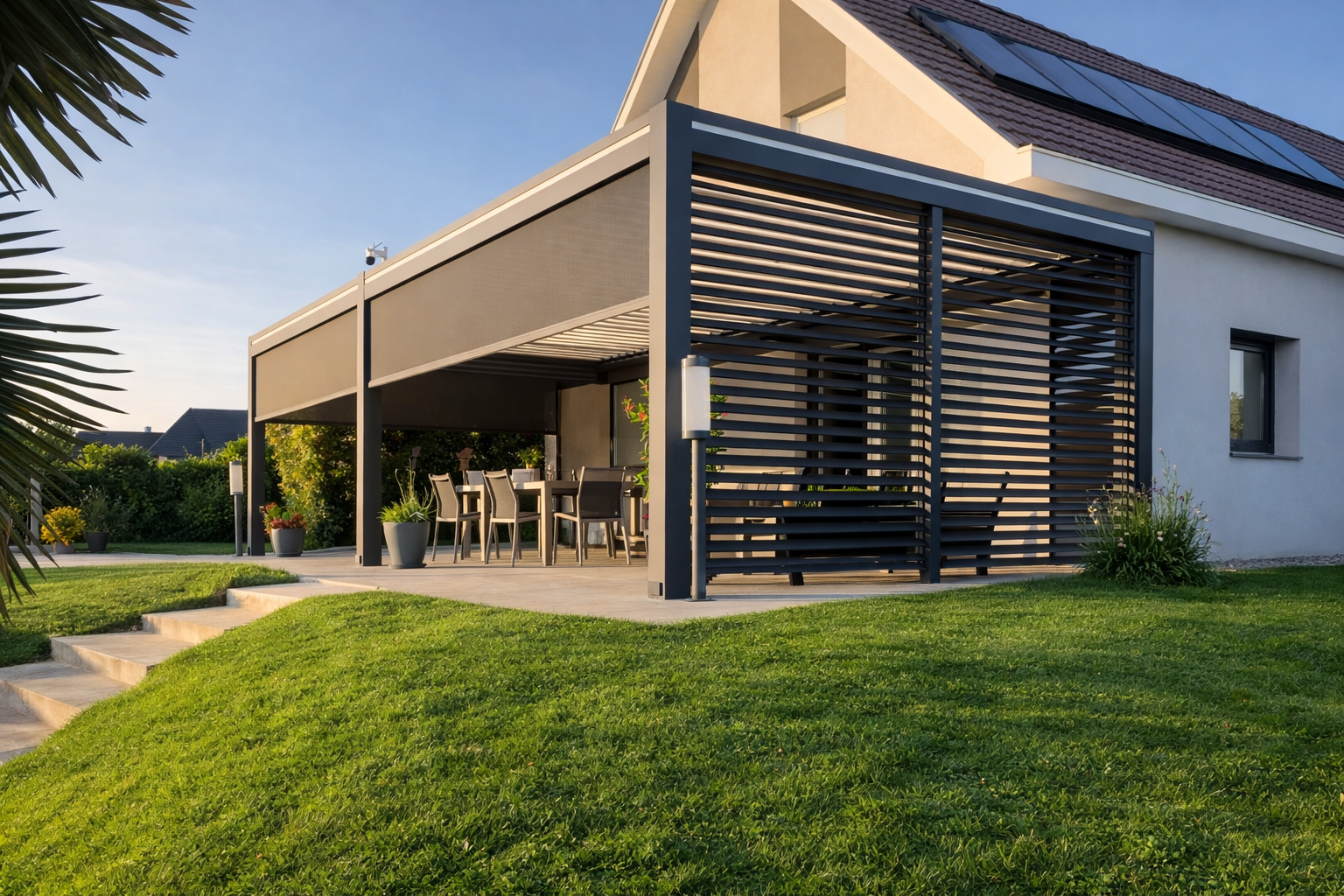
Fall: the season of atmosphere
Fall is perhaps the most beautiful season under a bioclimatic pergola. The slats can be adjusted to filter the low afternoon sunlight of September and October. Infrared heating kicks in to extend the evenings. The side awnings are partially extended to provide shelter from the first rains without closing off the space. The colors of the garden in the background create a natural setting of incomparable beauty. It’s the season for blankets, steaming cups of tea, and long conversations.
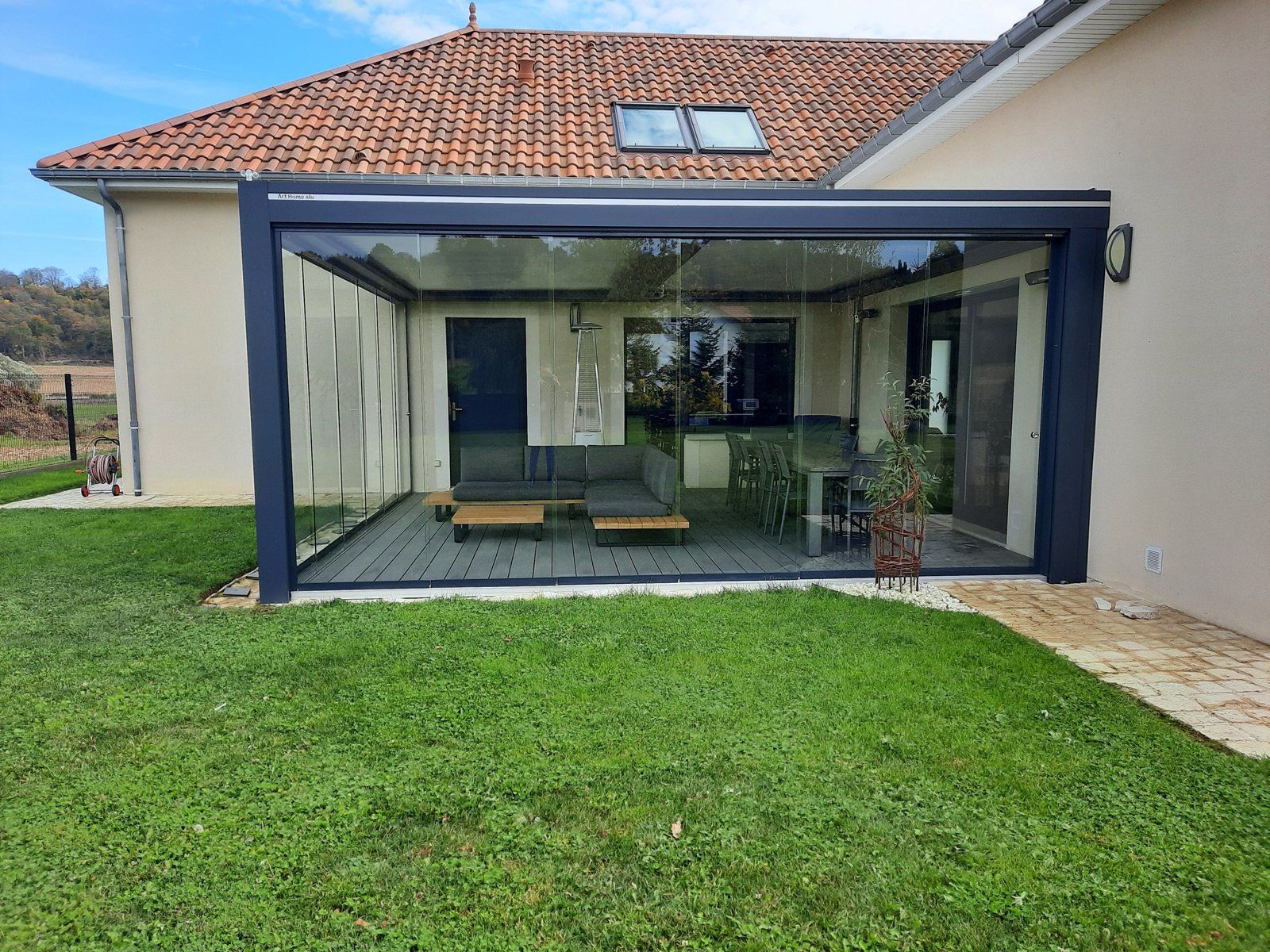
Winter: a cozy, warm space
In winter, the bioclimatic pergola closes and warms up. When the slats are closed, they ensure a watertight seal. The side closures—ZIP blinds or glass panels—create a protective enclosure that traps the heat emitted by the infrared panels. The soft lighting creates an intimate and cozy atmosphere. The pergola then becomes a luminous cocoon from which to gaze upon the snow-covered garden—a scene in itself—from a comfortable and sheltered space.
A well-equipped bioclimatic pergola isn’t just a summer space. It’s a space you can enjoy 365 days a year—one that changes with the seasons but remains comfortable, inviting, and lively all year round.
The pergola: an investment in your quality of life
Designing your pergola as a living space in its own right means making a long-term investment in your daily quality of life. It means deciding that outdoor square footage matters just as much as indoor square footage. It means allowing yourself to enjoy the outdoors year-round, to entertain without worrying about the weather, to work in the fresh air, and to relax away from screens in a space that reflects who you are.
At Art Home Alu, every pergola is custom-designed, crafted in our workshops in Alsace using top-quality materials, and installed by a network of expert dealers trained in installation and consultation. Because creating a living space deserves the expertise of those who make it their profession.