
Attached pergola or freestanding pergola: which is the best option for your outdoor space?
You’re thinking about installing a pergola to enhance your outdoor space, but one question quickly arises: should you attach it to the side of your house or install it as a freestanding structure in the middle of your garden? This choice, which may seem purely technical, actually has a profound impact on the architectural integration, functionality, and aesthetic appeal of your project.
At Art Home Alu, a French manufacturer of bioclimatic and fixed-roof aluminum pergolas, we custom-design each structure in our workshops in Bischwiller, Alsace. Whatever your layout, we have a solution that fits. This article provides a step-by-step guide to help you understand the specifics of each option and identify the one that best suits your property, your home, and your lifestyle.
The attached pergola: a natural extension of your home
Principle and operation
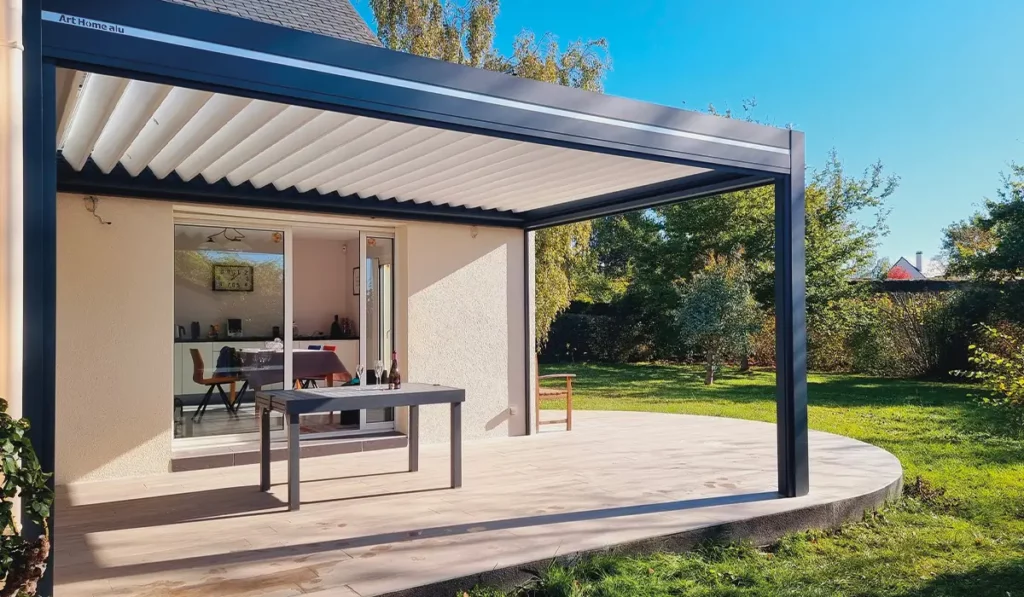
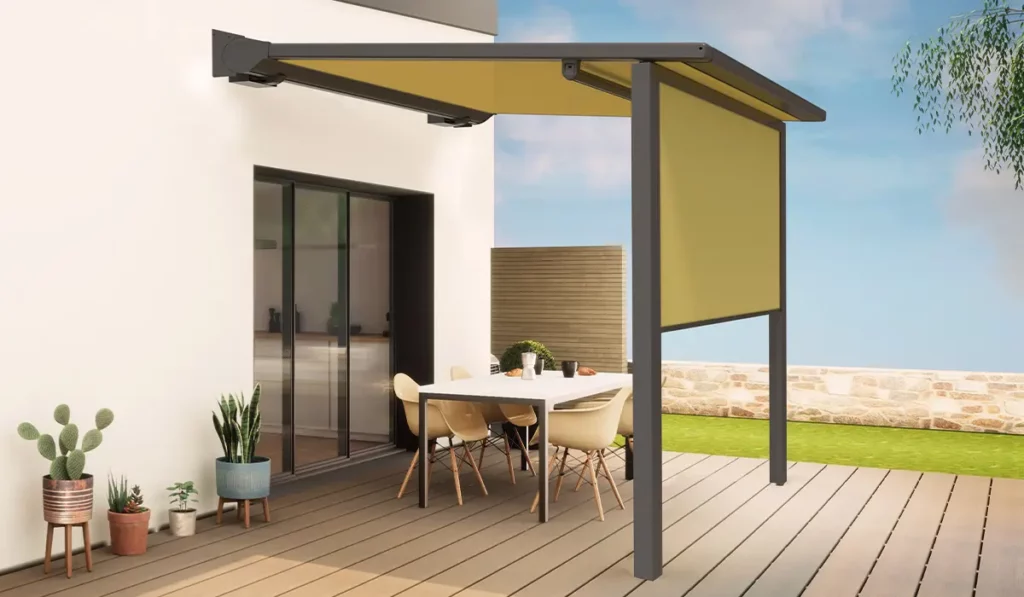
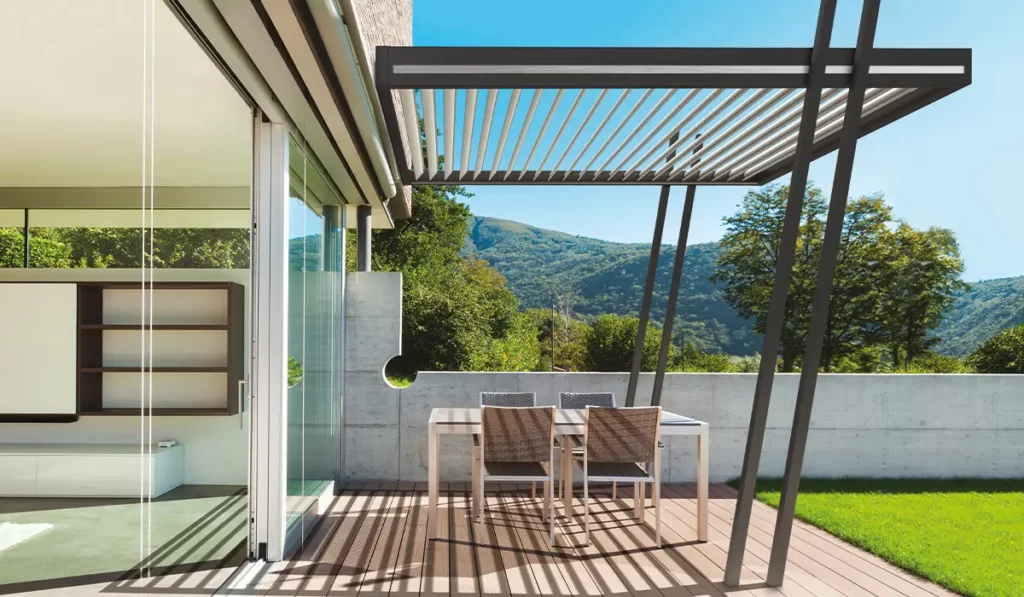
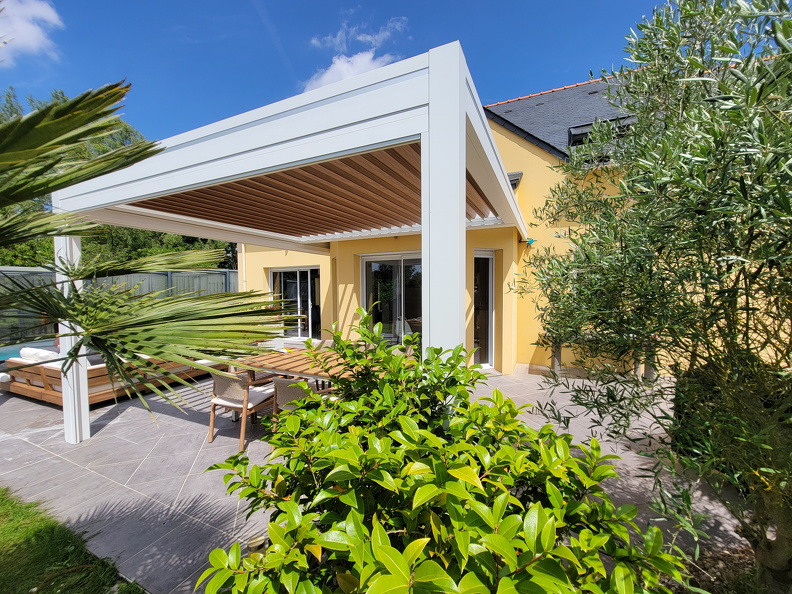
As the name suggests, a wall-mounted pergola is attached to an existing wall of your home or building. It rests on just two or three posts on the garden side, with the load-bearing wall providing structural support on the building side. This design creates a strong architectural continuity between the interior and exterior, literally transforming your patio into a natural extension of your living space.
All Art Home Alu product lines—including the Lux Integral and Lux Attractiv bioclimatic pergolas, Lux Harmony, Lux Ventury, and Lux Fast, or the Lux Arkéo and Lux Arkéo Duo fixed-roof shelters—are available in an attached version, with wall-anchoring systems designed to fit all types of facades: cinder block, brick, concrete, wood, or stone.
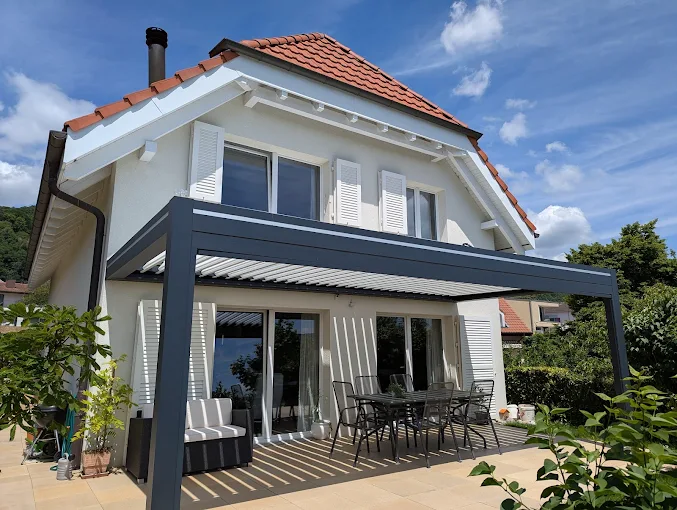
The Benefits of a Attached Pergola
- Seamless architectural integration: the pergola appears to be an integral part of the house
- Direct access from the inside through a picture window, French door, or opening
- Enhanced protection thanks to the support provided by the wall, especially when facing the wind
- Reduced footprint: fewer posts, more open space beneath the structure
- Perfect for covering an existing patio attached to the house
- Immediately enhances the curb appeal and overall appearance of the property
Points to watch out for
Installing an attached pergola requires that the supporting wall be sufficiently sturdy and accessible to accommodate the fasteners. In some cases, an assessment of the building’s structure may be necessary. It is also important to check local zoning regulations, particularly if the pergola is considered an extension of the building. Art Home Alu’s team of authorized dealers will guide you through these steps to ensure your project is on solid ground from the start.
Who is it recommended for?
An attached pergola is ideal for homeowners with a patio adjoining their house who want to create a seamless transition between indoor and outdoor spaces. It is the preferred solution for projects where architectural integration and aesthetics are top priorities.
The freestanding pergola: complete freedom of placement
Principle and operation
A freestanding pergola, also known as a standalone or island pergola, rests on four posts anchored directly into the ground. It does not require any support from an existing wall and can therefore be installed anywhere on your property: in the center of the garden, by the pool, at the back of the yard, or away from the house. This structural independence allows for great flexibility in placement.
Art Home Alu offers its entire product line—including both bioclimatic and fixed-roof models —in freestanding versions, with ground-anchoring systems suitable for all types of surfaces: concrete slabs, tiled patios, lawns, or gravel. Each structure is custom-designed to fit your property and meet your specific needs.
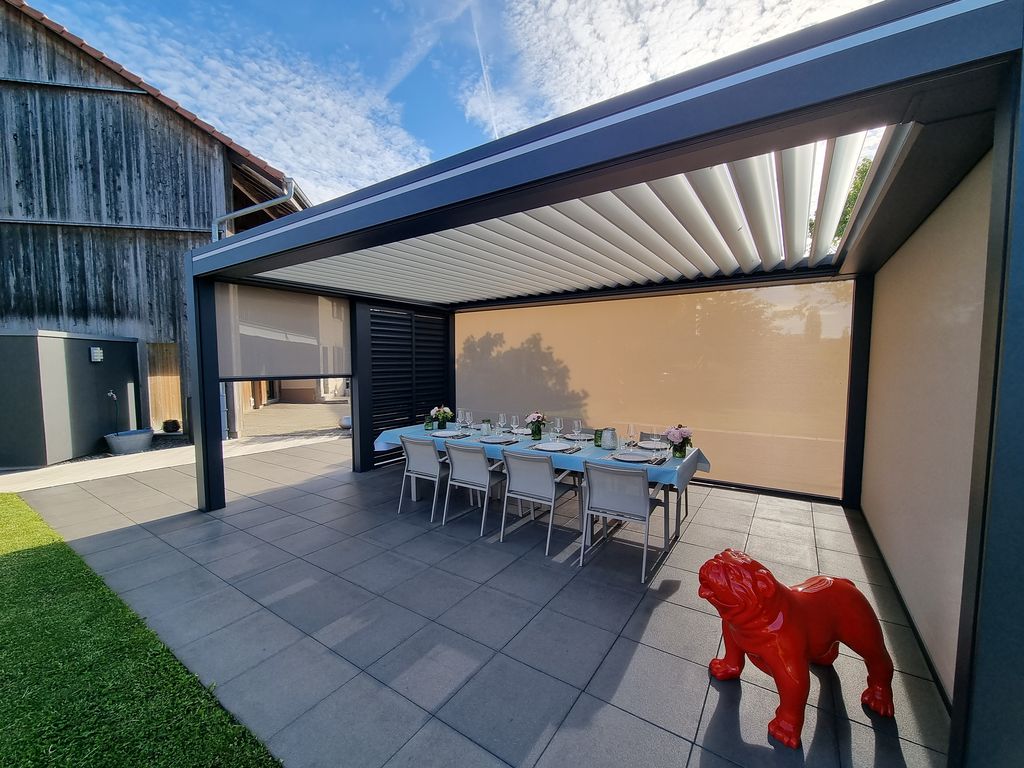
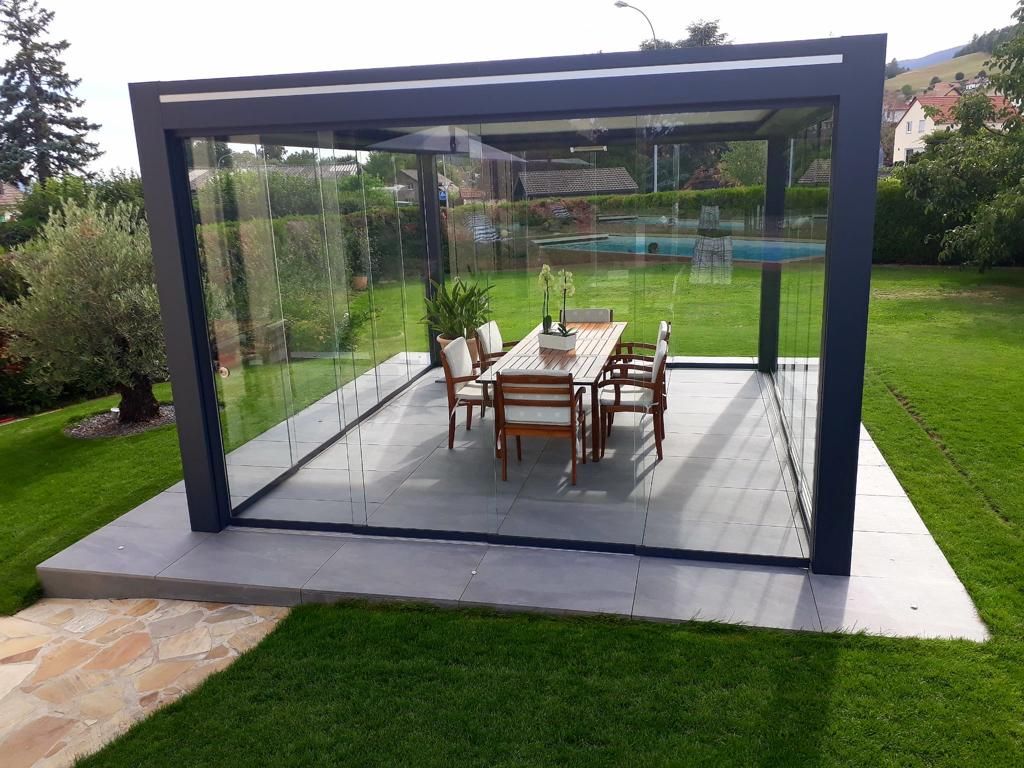
The Benefits of a Freestanding Pergola
- Flexible placement: Install your pergola exactly where you need it
- No restrictions related to the existing structure: no load-bearing walls required, no need to cut through the facade
- Orientation can be optimized based on sunlight and prevailing winds
- Perfect for creating a separate relaxation area: dining area, lounge, pool area…
- Suitable for all types of terrain and garden layouts
- A solution designed for professionals looking to build a deck without structural constraints
Points to watch out for
A freestanding pergola rests solely on its four posts, which means it requires careful ground anchoring to ensure the structure’s stability, especially in windy conditions. The quality of the base plates and fasteners is therefore essential. At Art Home Alu, every freestanding structure is engineered and sized to meet current strength standards, with anchors suited to the type of soil you have.
Who is it recommended for?
A freestanding pergola is ideal for homeowners looking to create an outdoor space separate from the house—such as a garden seating area, a barbecue area, or a pool house—or for those whose architectural layout does not allow for a wall-mounted installation. It is also perfect for professionals seeking to create flexible outdoor spaces without being constrained by the building structure.
Key takeaway: If your deck is attached to your home and you want a strong sense of architectural continuity, opt for an attached pergola. If you want more flexibility in choosing the location or if your layout doesn’t allow for wall mounting, a freestanding pergola is your best option.
Key questions to help you make the right choice
Before making a decision, take the time to answer these key questions:
- Do you have an accessible wall on the terrace side that’s sturdy enough?
→ If so, a lean-to pergola offers the best architectural integration. - Would you like to install your pergola away from the house, by the pool, or in the middle of your garden?
→ A freestanding pergola is the only viable option. - Does your project involve direct access from inside the house?
→ The attached version naturally facilitates this continuity. - Is your property exposed to strong winds?
→ Either way, Art Home Alu designs structures tailored to your needs. - Are you subject to specific zoning regulations?
→ Our certified installers will help you assess your local situation.
At Art Home Alu, every project is unique. Our experts take the time to assess your property, your home’s exterior, your surroundings, and your preferences to recommend the best configuration—attached, freestanding, or sometimes a combination of both for larger-scale projects.