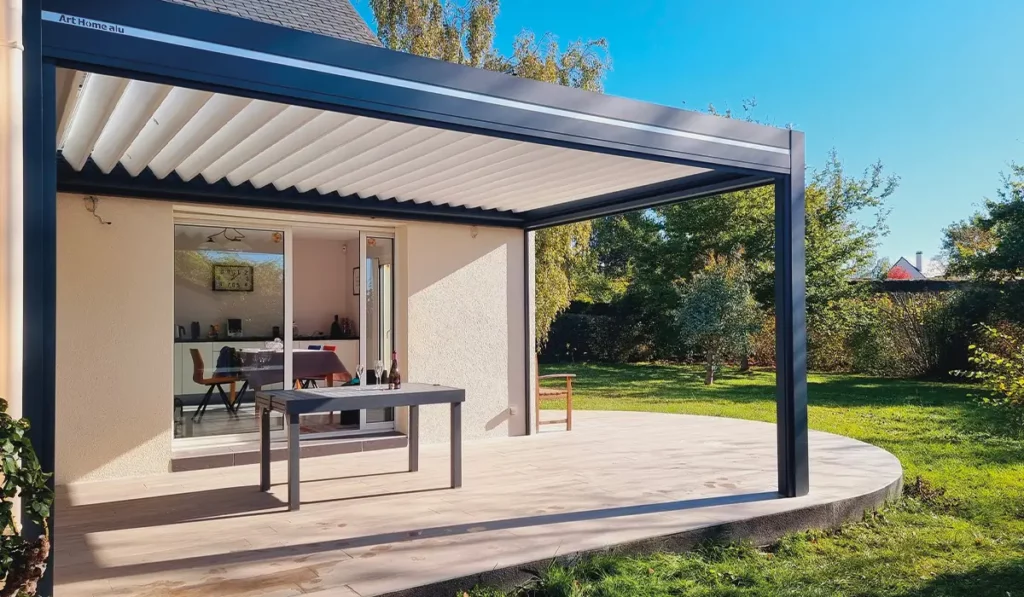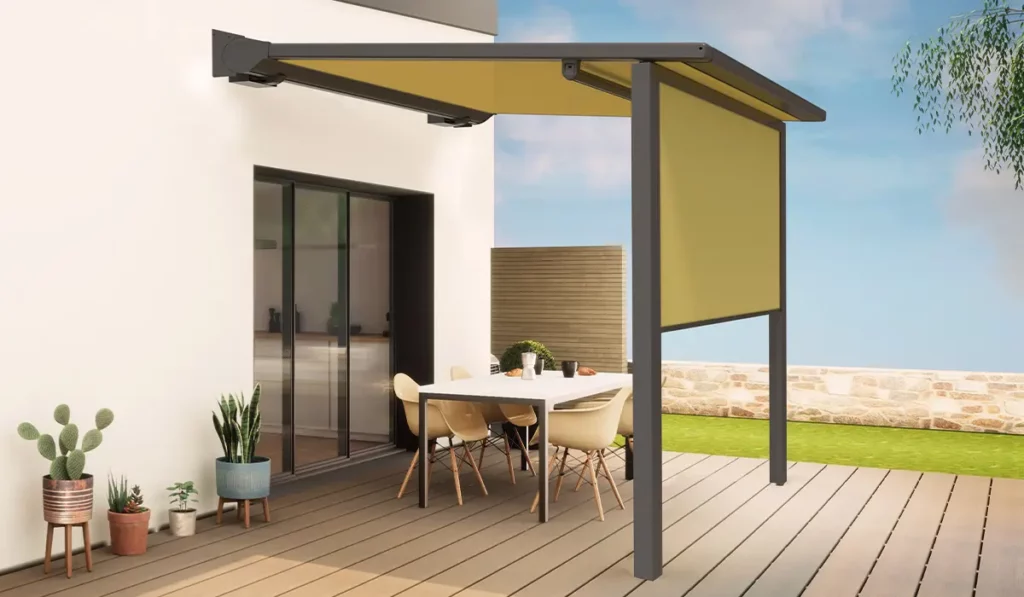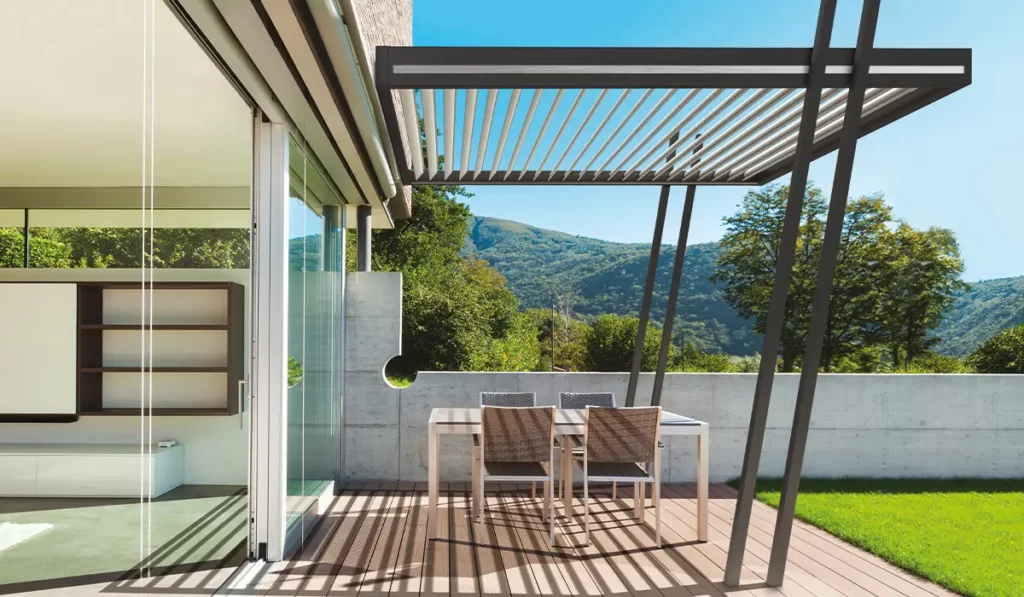

Sensors for bioclimatic pergolas: technology that transforms your outdoor comfort
Une pergola bioclimatique est bien plus qu’un simple abri de terrasse. C’est un système architectural vivant, conçu pour s’adapter en temps réel aux conditions climatiques. Mais pour atteindre son plein potentiel, elle doit être équipée de capteurs pergola performants (le cerveau discret qui pilote l’ensemble du dispositif).
Chez Art Home Alu, nous concevons des pergolas bioclimatiques en aluminium haut de gamme pensées dès l’origine pour intégrer des systèmes de domotique avancés. Dans ce guide expert, nous vous expliquons tout ce que vous devez savoir sur les capteurs de pergola : leur rôle, leurs types, leur fonctionnement et la valeur qu’ils apportent à votre espace extérieur.
What is a bioclimatic pergola sensor?
A pergola sensor is an electronic device built into the structure of your bioclimatic pergola that measures environmental conditions in real time (wind and rain) and transmits this data to a central control module.
Ce module analyse les informations reçues et déclenche automatiquement les actions nécessaires : ouverture ou fermeture des lames orientables, déploiement des stores.
Résultat : votre pergola réagit de manière autonome et intelligente, sans aucune intervention manuelle.
Sensor-based automation promises an outdoor space that lives in harmony with nature, rather than the other way around.
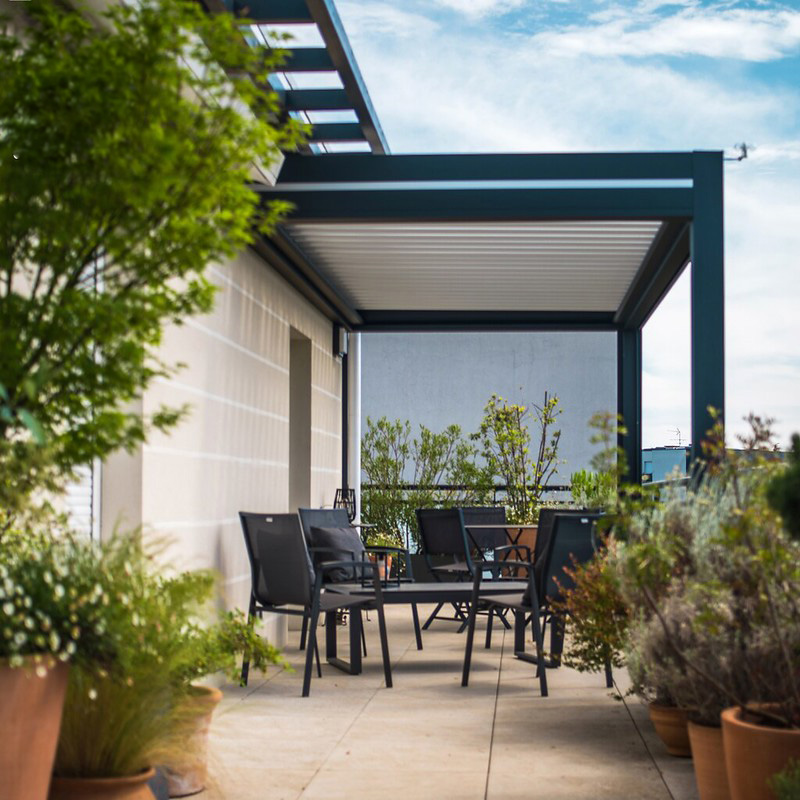
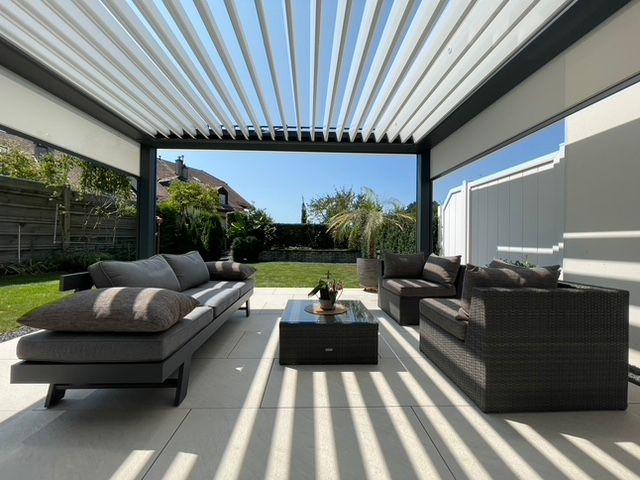
How does a bioclimatic pergola sensor work?
The sensors in a bioclimatic pergola use smart detection technology to analyze weather conditions in real time. Connected to the pergola’s motorized system, they instantly transmit this information to the central control system.
Depending on the conditions detected, the pergola can then:
- automatically close its slats when it rains;
- adjust their orientation according to wind strength;
- control the opening of the side blinds;
- optimize natural ventilation under the structure.
This automation makes the system easier to use and significantly improves everyday convenience.
Why should you install sensors on your bioclimatic pergola?
Optimal comfort in all seasons
Without sensors, operating a bioclimatic pergola relies entirely on the user’s initiative. With sensors, the system adapts instantly: the slats adjust automatically to filter the afternoon sun, close as a shower approaches, or open wide to provide natural ventilation on hot days.
Enhanced structural protection
Wind sensors, in particular, play a crucial role in ensuring the longevity of your investment. They automatically trigger the closure of the slats as soon as wind gusts exceed a critical threshold, thereby protecting the motor, the slats, and the entire structure from excessive mechanical stress.
Measurable energy savings
A properly calibrated solar sensor allows your pergola to maximize natural light while preventing the covered area from overheating. Combined with smart LED lighting, it adjusts the intensity of artificial light based on actual sunlight levels—a bioclimatic approach that significantly reduces your electricity consumption.
Increased heritage value
A bioclimatic pergola is a premium feature that adds lasting value to your property. It reflects a thoughtful architectural approach and technological expertise that potential buyers recognize and appreciate.
The two types of pergola sensors
The rain sensor
The rain sensor is one of the most popular features on a bioclimatic pergola. As soon as the first drops of rain are detected, the adjustable slats close automatically to prevent water from getting inside the structure.
Even when you're away, your patio remains protected from unexpected weather changes.
The wind sensor
The wind sensor, also known as an anemometer, measures wind speed to automatically adjust the position of the blades and/or shades.
When the wind becomes too strong, the system can:
- adjust the blades to reduce wind resistance;
- completely close the roof;
- raise the side blinds.
This feature helps extend the life of your aluminum pergola and minimizes the risks associated with inclement weather.
Bien que les capteurs automatisent une grande partie du fonctionnement de la pergola bioclimatique, ils ne remplacent pas totalement la vigilance humaine.
En cas de fortes rafales ou d’intempéries importantes, il reste recommandé de remonter manuellement les stores afin de préserver durablement la structure et les équipements.
An even smarter bioclimatic pergola
Sensors transform the bioclimatic pergola into a truly connected living space that can automatically adapt to outdoor conditions. Thanks to these sensors, your system offers greater comfort, safety, and convenience in your daily life.
Whether it’s a rain sensor or a wind sensor, each device helps protect your pergola and outdoor furniture, while making it easier to enjoy your patio space throughout the seasons.
At Art Home Alu, we design custom aluminum bioclimatic pergolas that incorporate reliable, high-performance technologies to provide you with an outdoor space that is as elegant as it is smart.