
Bioclimatic pergola or fixed-roof shelter: which structure should you choose for your outdoor project?
When it comes to equipping your patio with a durable and attractive structure, two options stand out in particular: the bioclimatic pergola with adjustable slats and the fixed-roof canopy. These two products share a key feature—the strength of aluminum and effective protection against the elements—but they reflect very different design philosophies.
At Art Home Alu, a French manufacturer of high-end pergolas based in Alsace, we design and produce both types of structures to order at our workshops in Bischwiller. Drawing on our expertise, this article will help you understand the specific features of each solution so that you can make an informed choice that’s perfectly suited to your project.
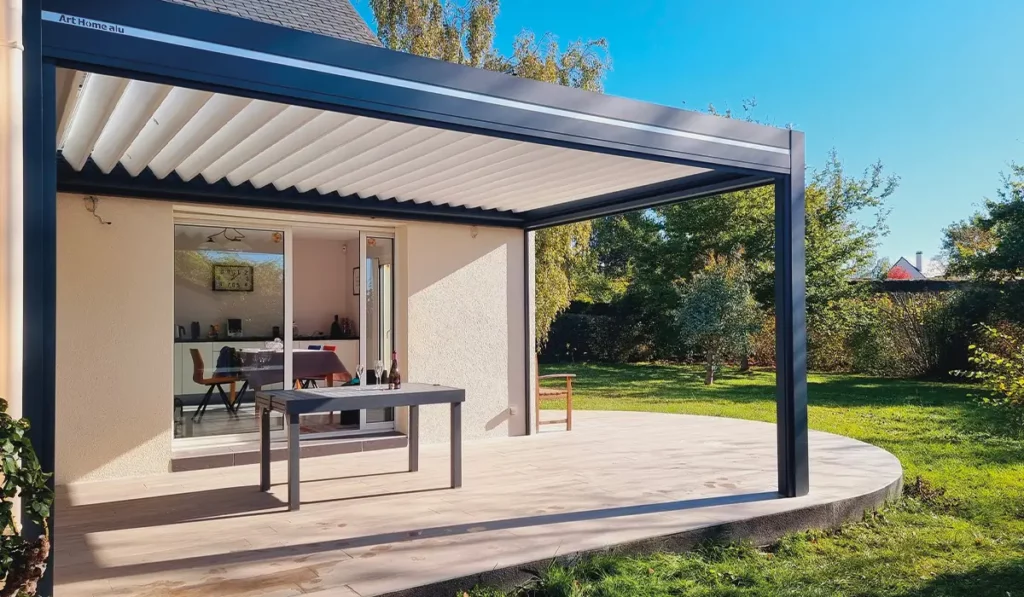
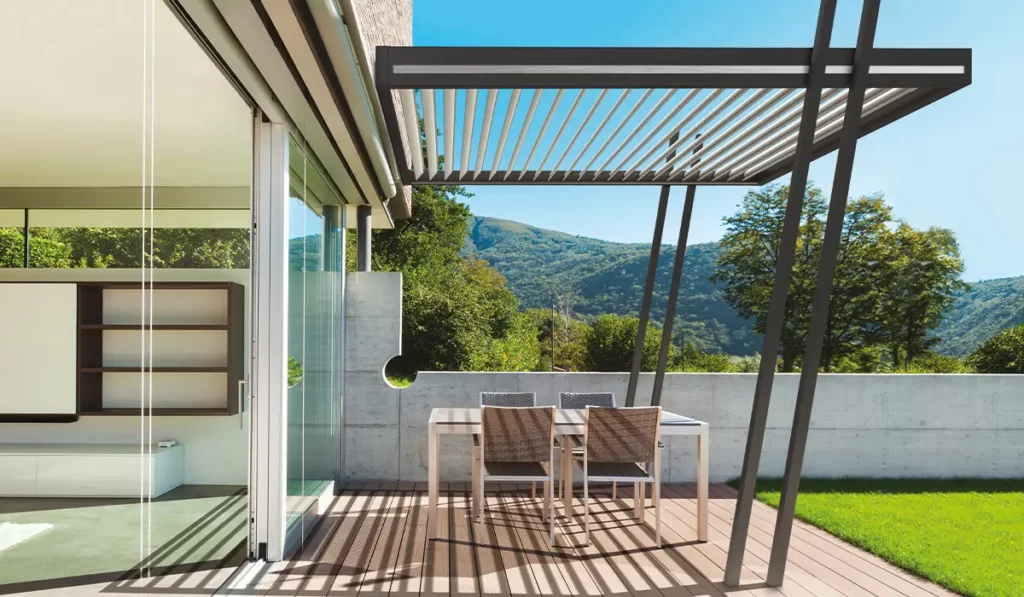
The bioclimatic pergola: modularity and climate-responsive design
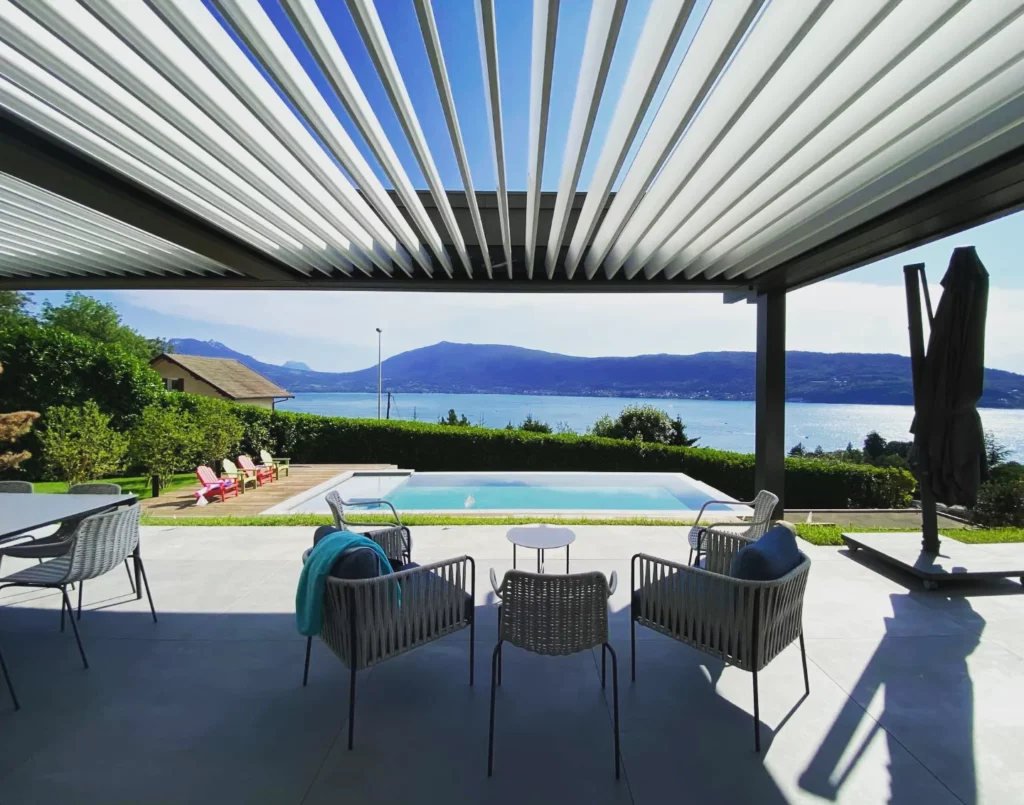
The bioclimatic pergola features a roof made of motorized, adjustable aluminum slats that can rotate between 0° (closed position, rainproof) and 135° (open position, allowing for maximum ventilation). This system allows you to precisely control light, heat, and airflow based on weather conditions and your current preferences.
When connected to a mobile app, a remote control, or a home automation system, the slats can also be automated using rain or wind sensors. At Art Home Alu, our Signature ranges— Lux Integral, Lux Attractiv, Lux Harmony, Lux Arkeo Duo, Lux Ventury, and Lux Fast —embody this level of technical performance, enhanced with options such as integrated LED lighting, heating, adjustable privacy screens, and side awnings.
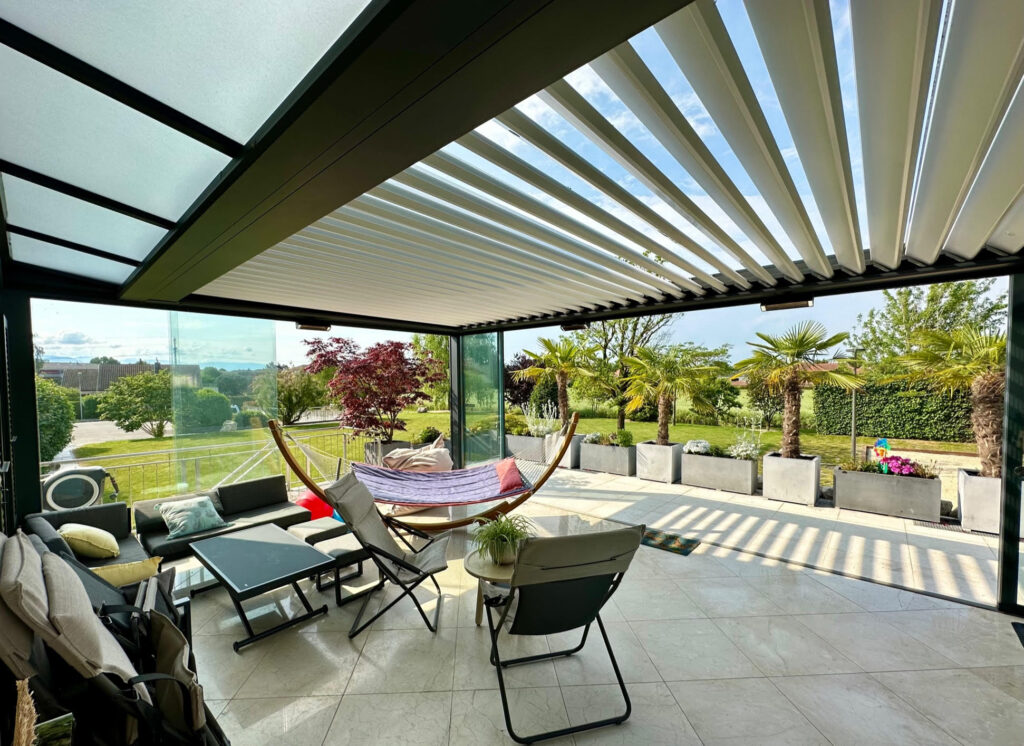
The Benefits of a Bioclimatic Pergola
- Dynamic climate control: sun, shade, rain, wind… everything is adjusted in real time
- Optimized sealing when closed, with integrated drainage in the side panels
- Optimal natural ventilation when the louvers are open
- Highly customizable: custom dimensions, motorization, connectivity, accessories
- Suitable for year-round use, regardless of weather conditions
- The perfect solution for turning a patio into a true outdoor living space
Who is it recommended for?
The bioclimatic pergola is ideal for homeowners who want to enjoy their patio year-round, with precise control over their outdoor environment. It is also highly sought after by professionals in the restaurant and hospitality industry (CHR) for making the most of their spaces year-round, regardless of the weather. It is a technological, scalable, and versatile solution.
The fixed-roof shelter: sturdiness and architectural durability
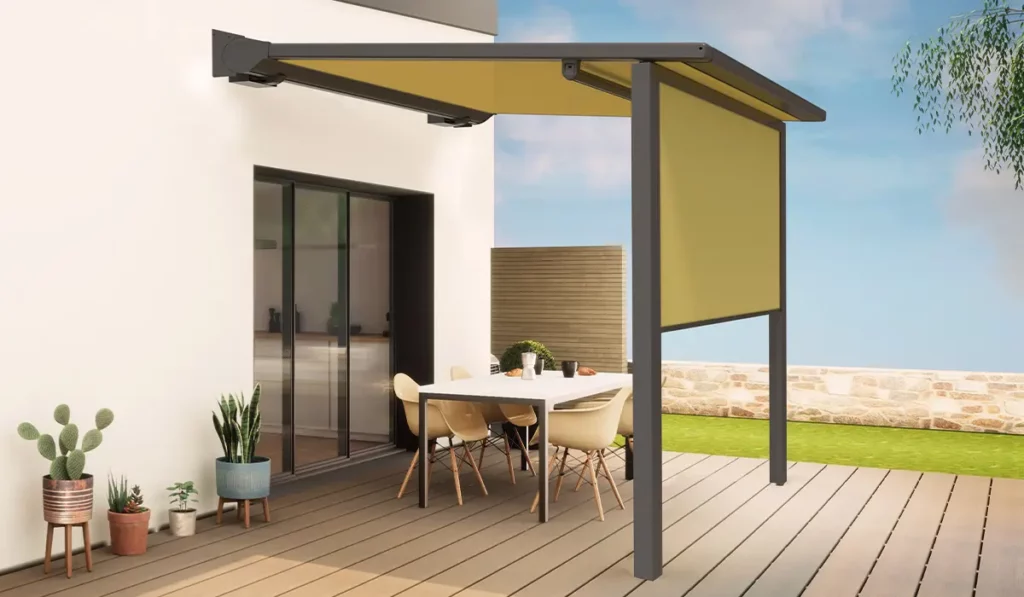
The fixed-roof shelter operates on a radically different principle: its roof consists of sandwich panels—polycarbonate, glass, aluminum tiles, or siding—that do not move. This durable structure provides maximum protection from the elements in all conditions, without the need for motorized mechanisms or user intervention.
In this category, Art Home Alu offers the following models Lux Arkéo and Lux Arkéo Duo, two fixed-roof shelters made of powder-coated aluminum, designed with the same high standards of quality as the rest of our range. These structures blend seamlessly with your existing architecture and can be attached to your home, installed as a freestanding unit in the center of your garden, or placed in front of your house to serve as a carport to protect your vehicle.
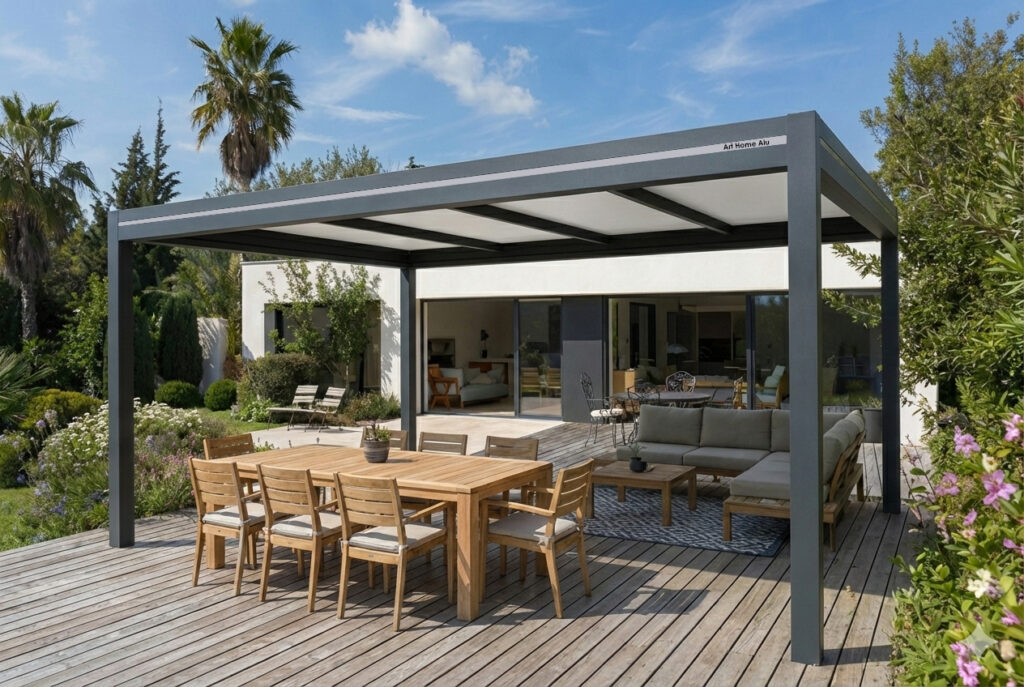
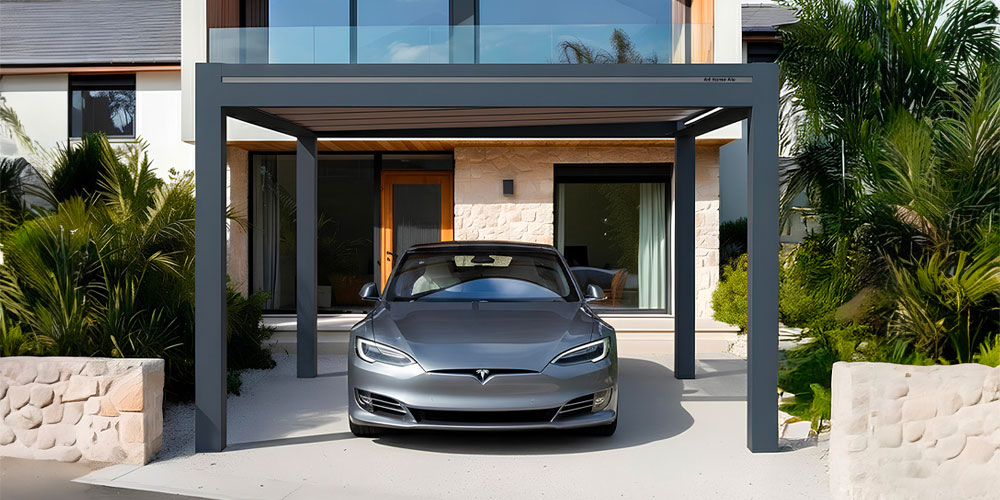
The Benefits of a Fixed-Roof Shelter
- Complete and continuous protection: no action required in bad weather
- A particularly sturdy structure, designed to withstand heavy snow loads and high winds
- Seamless architectural integration: feels like an extension of the home
- Minimal maintenance thanks to the absence of a motorized mechanism
- Exceptional durability and long-term property value appreciation
- Options available for integration: lighting, side blinds, glass curtains, adjustable privacy screens…
Who is it recommended for?
The fixed-roof shelter is designed for homeowners who are primarily looking for a durable, sturdy, and low-maintenance structure that blends seamlessly with the architecture of their home. It is particularly well-suited for regions exposed to harsh weather conditions (heavy snowfall, strong winds).
Bioclimatic Pergola vs. Fixed-Roof Shelter: The Essential Comparison
Key takeaway: If you want complete control over your outdoor space—with the ability to open, close, or adjust it as needed—go for a bioclimatic pergola. If you prefer a permanent, architectural structure without mechanical constraints, a fixed-roof pergola is your best choice.
Bioclimatic pergola
-
Rain protection: Full and automatic (waterproof slats)
-
Solar control: Precise and adjustable (slats 0°–135°)
-
Suitable for year-round use: Yes, with optimal comfort
-
Natural ventilation: Excellent (slats open)
-
Customization: Very high (engine, lighting, heating, etc.)
-
Technical Features: Integrated Motorization & Home Automation
Shed with a fixed roof
-
Rain protection: Full and permanent (fixed roof)
-
Solar control: Fixed - Requires additional features (blinds, privacy screens, etc.)
-
Suitable for year-round use: Yes, very durable
-
Natural ventilation: Limited by the fixed roof
-
Customization: High (hybrid, lighting, etc.)
-
Technical specifications: Durable construction, no moving parts
How do you make the right choice for your project?
Before making your decision, ask yourself these key questions:
- Do you need to adapt your outdoor space based on the weather and time of day?
→ A bioclimatic pergola offers you this unique flexibility. - Are you primarily looking for a permanent, architectural structure that requires no maintenance?
→ A fixed-roof shelter is the best solution. - Is your region prone to heavy snowfall or strong winds?
→ Both solutions are suitable, but a fixed roof may offer additional structural benefits depending on the specific conditions. - Would you like to enjoy natural ventilation in the summer while staying protected from the rain?
→ The bioclimatic pergola is unmatched in this regard.
In any case, our Art Home Alu teams are available to work with you on your project, assess your technical, architectural, and budgetary constraints, and propose the most suitable solution—whether it’s a bioclimatic design or a fixed-roof system.